(This is long, and will mostly/maybe interest the Norwegian family, so skip to the end if you’d rather just know the answer).
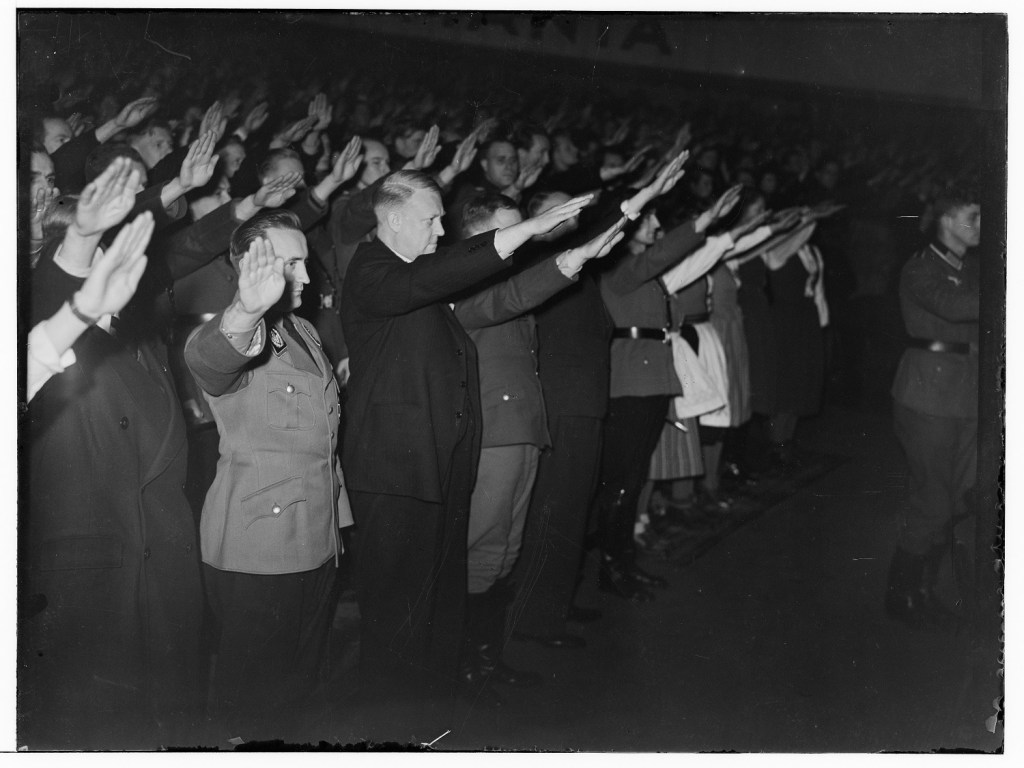
As long as I can remember, I’ve been told my step-grandad Arnijot Lehmann was a Nazi supporter in Norway, who left for South Africa after WWII because of shame. Norway had a strong resistance and did not like being occupied.
I knew my grandfather well until I left Africa for Norway aged 10. And he lived for many years after that. So he’s not some distant relative.
I decided to investigate his allegiances in Norway during WWII. I started by talking to relatives (the next generation down from him) in Norway. “Yes, that story was true” they said. And he was also afraid of being arrested and persecuted.
After the war, 92,000 Norwegians were investigated for Nazi connections. 46,000 of these were sentenced. The head Norwegian traitor, Quizling, was executed.
If my grandfather was escaping this investigation, or even the shame of association, why choose South Africa?
Well, way back there was a huge influx of Norwegians (1882) to Durban, leaving a struggling and overpopulated country, looking for new ventures and success. The USA was not doing well financially, and colonial South Africa welcomed these white Nordics with open arms.
Around this time, Norwegians Søren Eriksen Jaabæk and Helga Aadnesen moved to Durban. They married there in 1902. Søren was a factory worker – earning enough to get this fine photo taken.
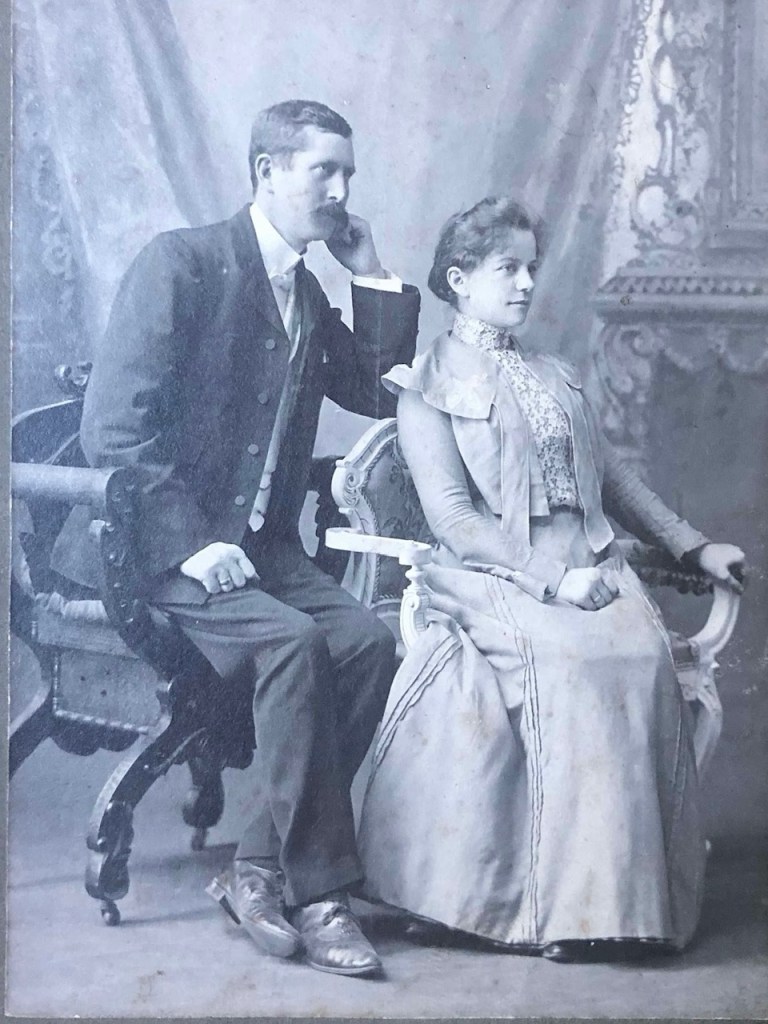
Two years after marriage they had a son, Gunnar, born in Durban. And two years after that, a daughter, Emily Anna, was born in Lillesand near Kristiansand Norway. That’s my grandma (I called her Farmor). I’m guessing Emily was born in Norway for citizenship then moved back with her mum to Durban. I’ll look for the passenger and citizenship records one day.
When baby Emily grew up, she met Norwegian (Hordaland) born Arnijot Lehmann, three years younger than her. He was in South Africa at the time. They married in 1938 in the Swedish Lutheran church Johannesburg.
Despite growing up in Africa, Emily spoke fluent and “proper” Norwegian. And Norwegian was Arnijot’s first language.
A year later, the couple sailed back to Norway (again!) from Durban, with Emily’s mum Helga in tow.
The reason for this trip was to so their unborn child, my stepdad Olav Emil, could be born in Norway, I assume. It seems many immigrants return to their origins to have their children. Perhaps for citizenship, maybe nostalgia, maybe family support, avoiding war, or accessing better services. Who knows.
Regardless, both Emily’s mum and Emily herself made the very long sea journey back to Norway for one birth each.
They left Emily’s brother and father in Durban. Perhaps so the two breadwinners could keep working to support the family around the big upheaval of having baby Olav Emil, until Arnijot could return to his job in Durban. This makes me think Olav Emil and his parents and his grandmother were coming back home to Africa once Emily and Olav Emil were strong enough. The family wouldn’t have wanted to split up this way long term, surely.
When leaving Durban for Kristiansand/ Lillesand in early 1939, they would have not known about the imminent war. They must have unwittingly and tragically got stuck in Norway during the WWII invasion.
So Olav Emil was born 2nd July 1939, the Germans unexpectedly took over Norway when he was 9 months and 7 days old. How frightening. The family were trapped. Olav Emile spent his first 5 years, 10 months, and 6 days living under Nazi occupation in Norway. He saw some things he shouldn’t. And recalled the war era. He recalled that the Nazis were dangerous and frightening, but were nice to him, the cute blonde Christian little Norwegian he was.
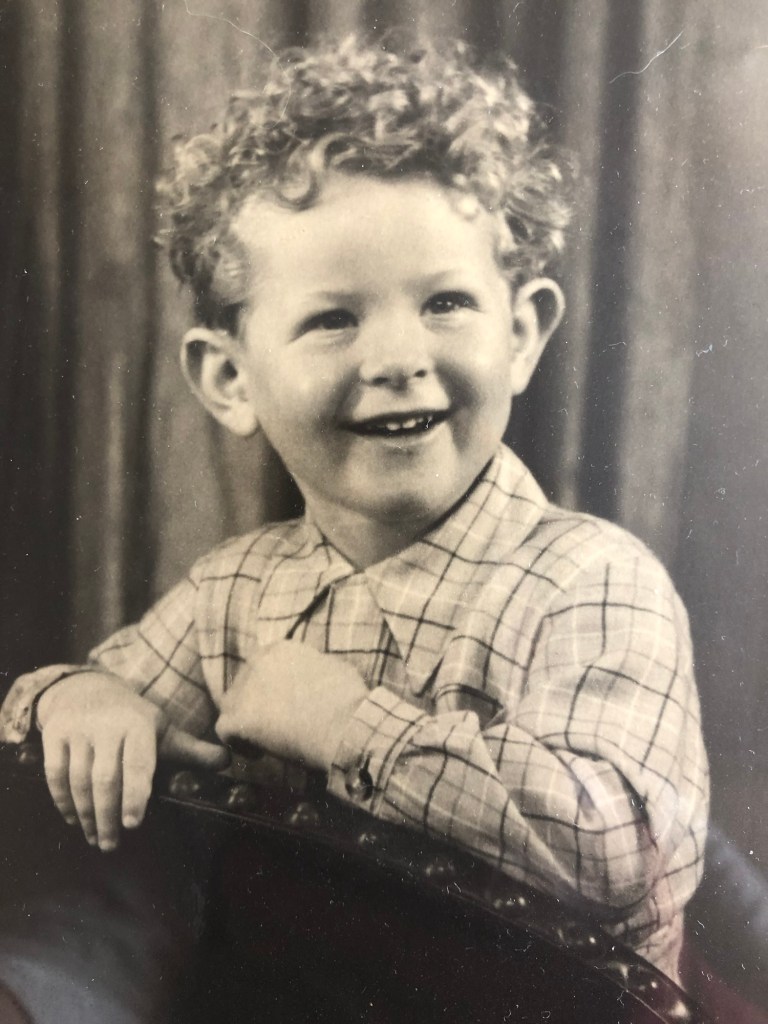
What did this little three-generation family of four think of Hitler? Were they in favour? Were they resisters? Or were they neutral?
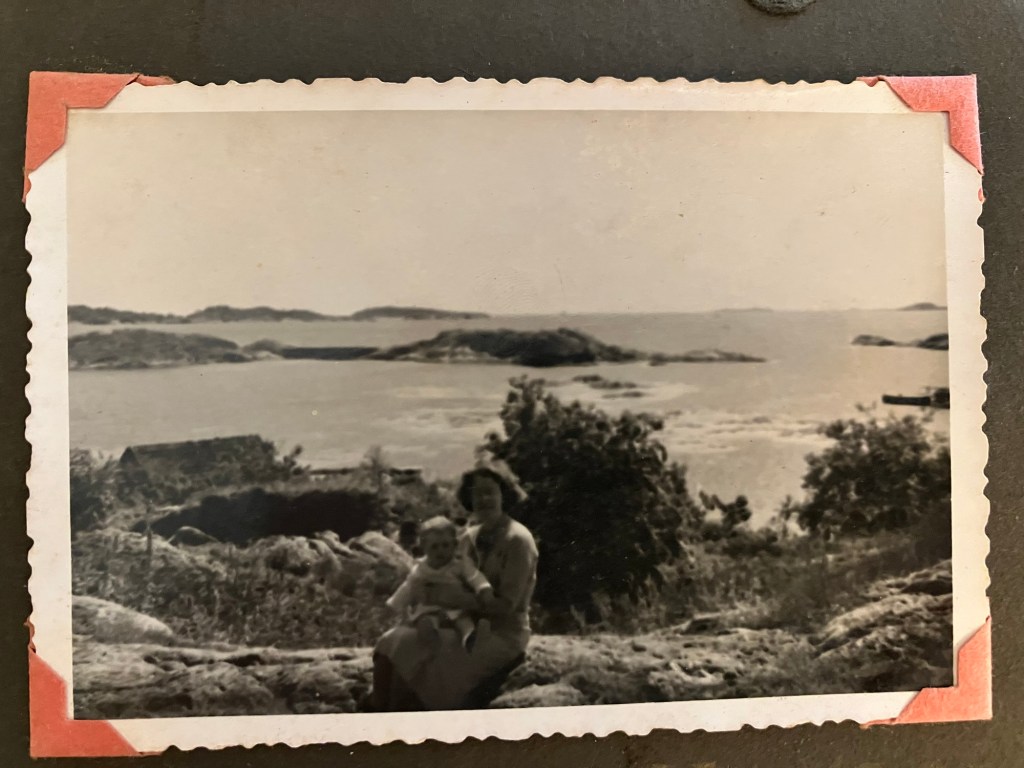
Søren Jåbæk’s grandchildren
The Norwegian Association’s journal reports that in Johannesburg, South Africa, the secretary of the Norwegian association there, Mrs. Emily Lehmann, has established a school for Norwegian children. The teaching initially includes Norwegian language, religious studies and history.
Songbooks have been purchased from Norway. The children have Norwegian school one day a week. Mrs. Lehmann, who was born in Durban, is the granddaughter of Soren Jäbak; she is married to engineer Arnljot Lehmann, son of former vicar in Gierstad Henrik Lehmann.
There are also plans to build a Norwegian church in Johannesburg.
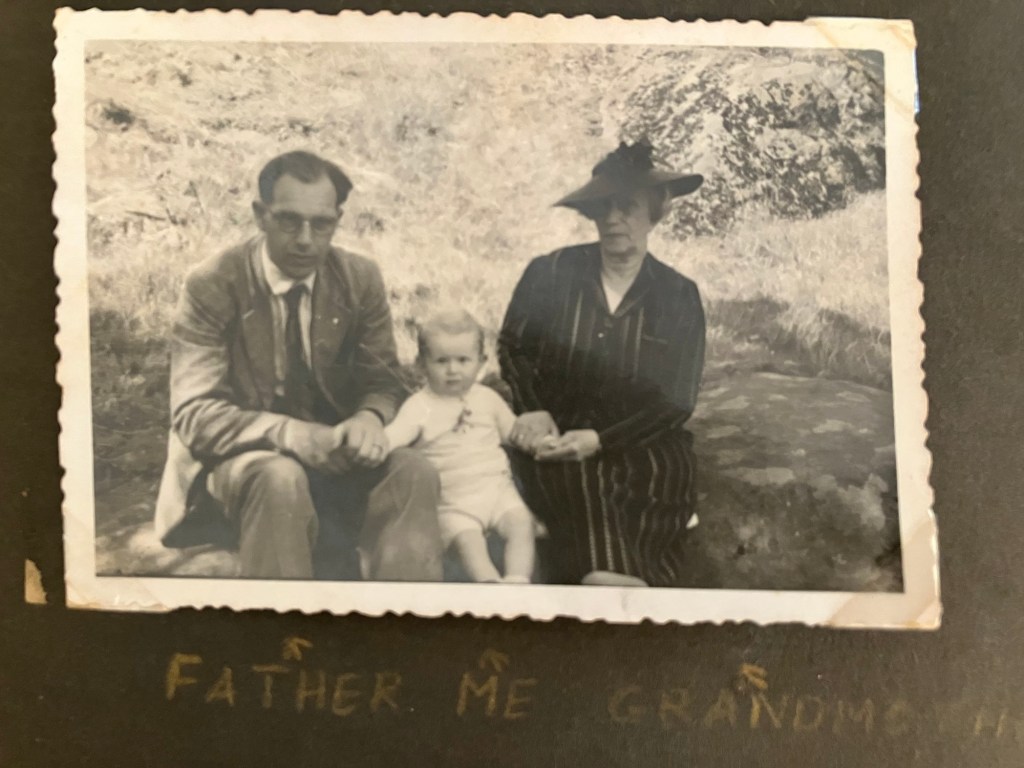
Family photo.
I went to Arkivet, the previous Gestapo head office / torture cells in Kristiansand, to find out.
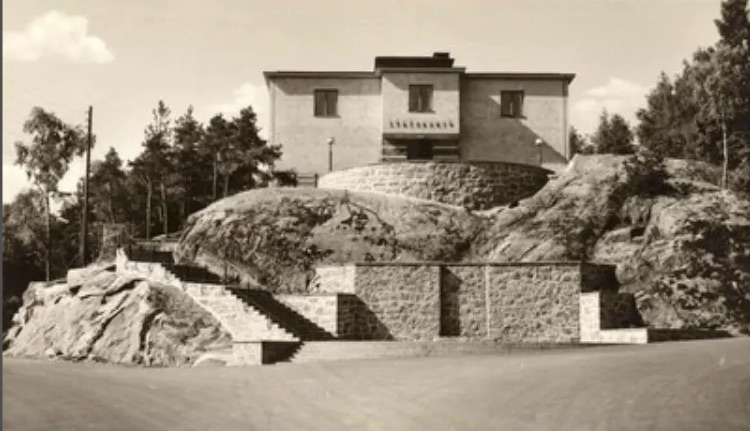
180 or so Norwegians were in the service of the Gestapo in Kristiansand. These locals were recruited in a number of ways: through pressure, by chance, through ideological persuasion, for financial motives or out of sheer opportunism.
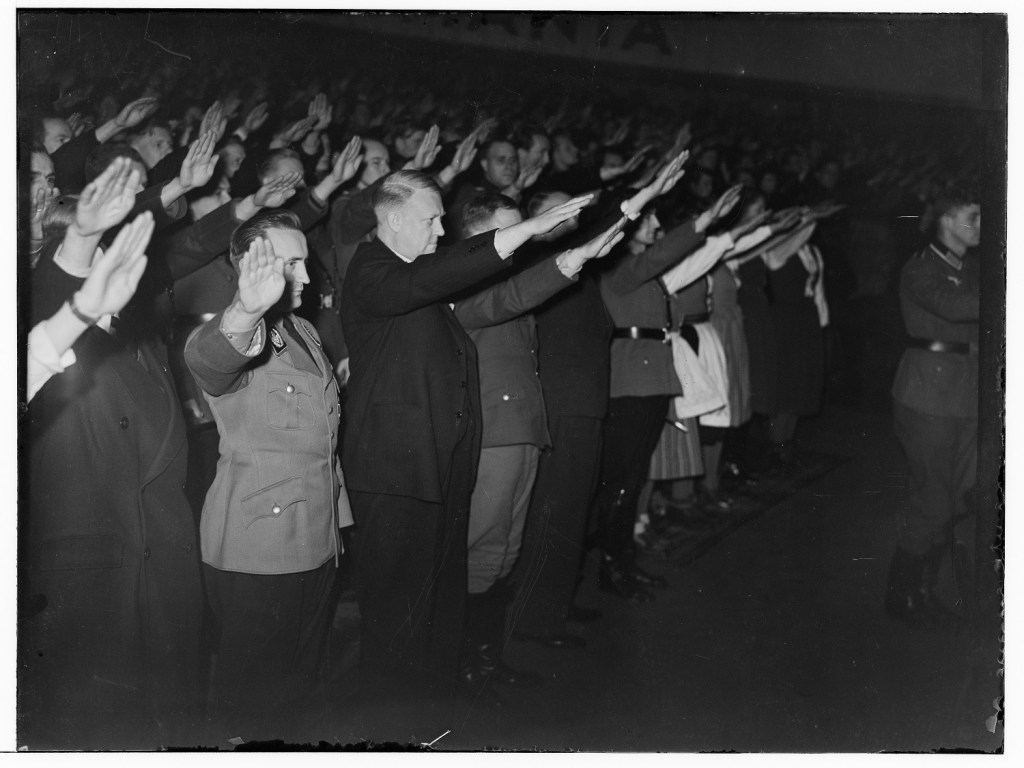
All archives, of course, were burned by the Nazis and their supporters when the war ended, so who knows who those Norwegian traitors were? Answer- lots of people, including themselves, their friends and families, all the townsfolk, the government of Norway and Germany, etc etc. Because of the shame and stigma, and fear of persecuting the innocent and the victims (such as forced “girlfriends” and children of Nazis, ABBA member Frida included), I think it’s been swept under the table. I hold no judgement as most were under unimaginable pressure to join the dark side, were naive, or were victims. Punishment and branding easily breed new contradictions. Treating defeated oppressors generously has been important in achieving the reconciliation needed when living together. This was communicated clearly at Oslo’s Nobel Peace Prize Museum. And is how Norway functions. Kindly.
Also, Nazis’ atrocities were not specific to that time and place or to those people: they could in fact happen anywhere. There is no such thing as evil. People will do what they think is just and right, even if this means genocide or starting war, and if others let them they will continue. Reflecting on the Nazis helps us understand what we shouldn’t allow.
So I’m keen to reflect on what happened in my own family, at this terrible time, in our own culture’s recent history.
Historian Simen Zernichow (of the Centre for History Communication and Peacebuilding) kindly offered to help me at no cost.
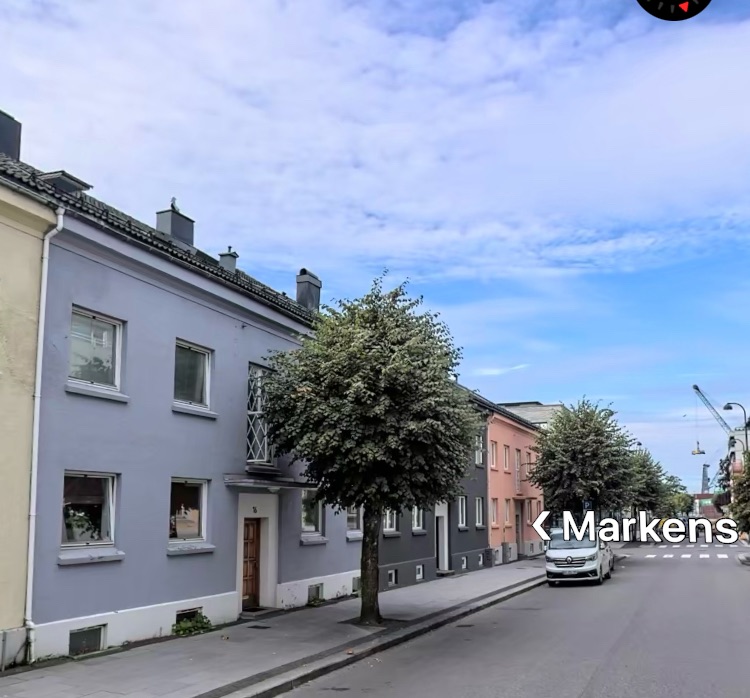
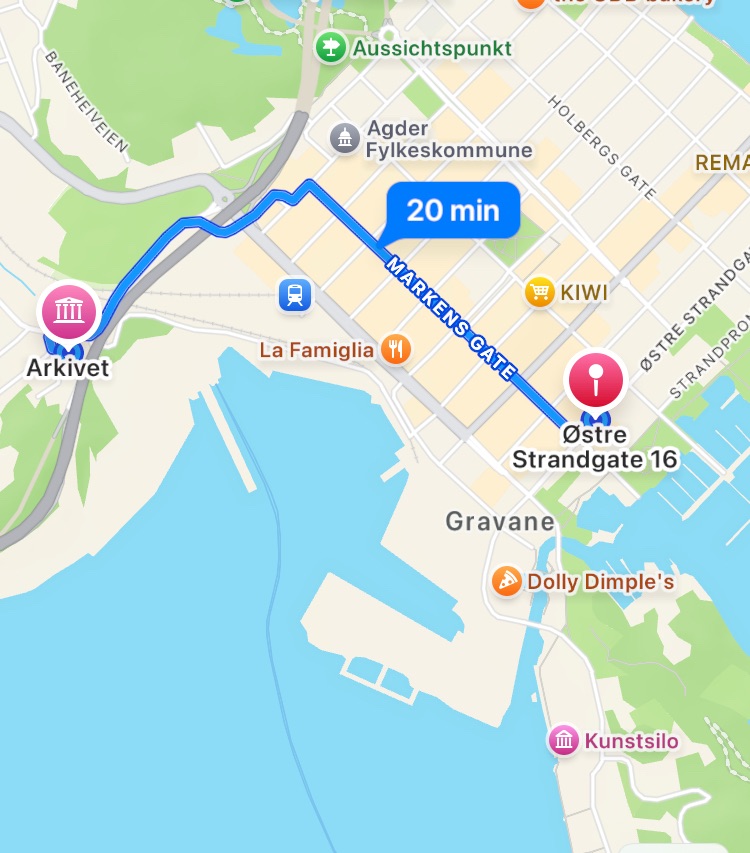
He found that in 1939 before the invasion, Arnljot and his wife, his mother-in-law, and his young son (my step father, Olav Emil) were living at Østre Strandgate 16, Kristiansand (the blue house). In the city centre, and just 20 minutes walk from what would become the Gestapo headquarters (called Arkivet now).
However, on the 9th of April 1940, on the very day the Germans invaded Norway, Arnljot fled and took his little family to a little inland forestry village, Åmli, where they arrived the same evening. Here the Nazi presence was not as noticed. Arnljot’s cousin Sigvald Salvesen lived in this town. He was an engineer, but also a self taught and world-renowned beaver expert and exporter, publishing scientific papers and books, and making films on the topic. He and his neighbour are credited with saving the beaver from near extinction. (I’m now on the trail of this beaver relative-I have an invitation to meet with London’s Natural History Museum – spiderwebs and rabbit holes!)
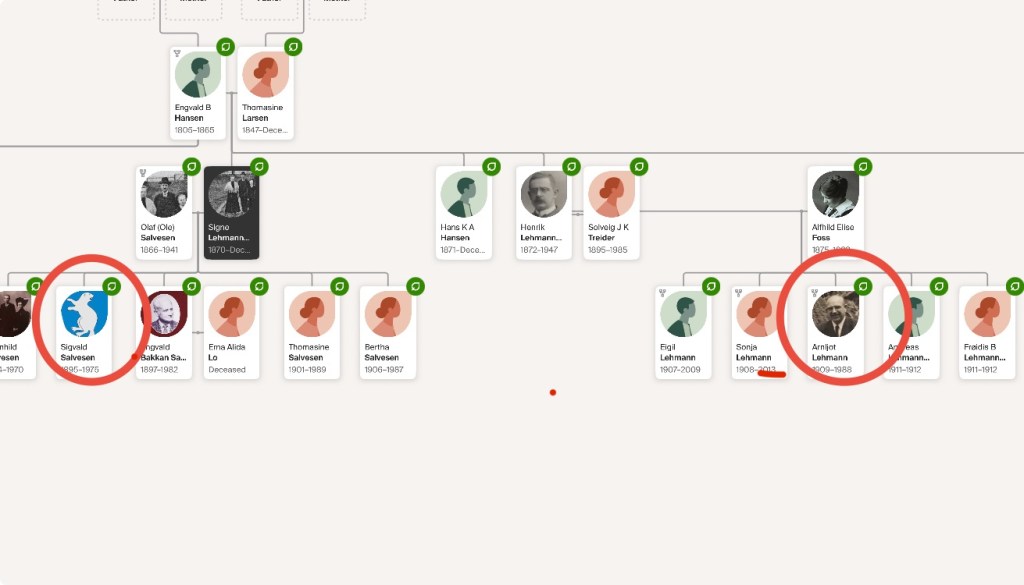
What Arnljot did for work in Åmli through these years I don’t know. He was a civil engineer so his skills would be in great demand by the invaders who saw Norway as the jewel in their crown, and were rapidly developing it. The country was run by Germany and a quasi Norwegian government (all Hitler’s people in effect). So everyone from the engineers to the beaver researchers were in reality working for “the enemy” in Norway. There was no way out unless you escaped the country. Hard to do with spies, informers and soldiers all around.
Throughout the war this South African family kept their heads down and stayed in the forest safely away from the horrors of the cities, until the Germans were defeated on May 8th 1945.
Then, as soon as possible, on October 23rd 1945, five short months after the brutal war ended, the four Lehmann – Jaabacks sailed back to their lives and loved ones in Durban, South Africa. Back to Emily’s father and adult brother Gunner. Poor Gunner had spent most of the war in a German prisoner of war camp after having been captured in North Africa fighting Nazis. Helga, Emily, Arnljot and Olav Emil would be meeting Gunner’s little five-year-old boy Henton for the first time. And the relatives who stayed in Africa would be meeting little 6 year old Olav Emil for the first time.
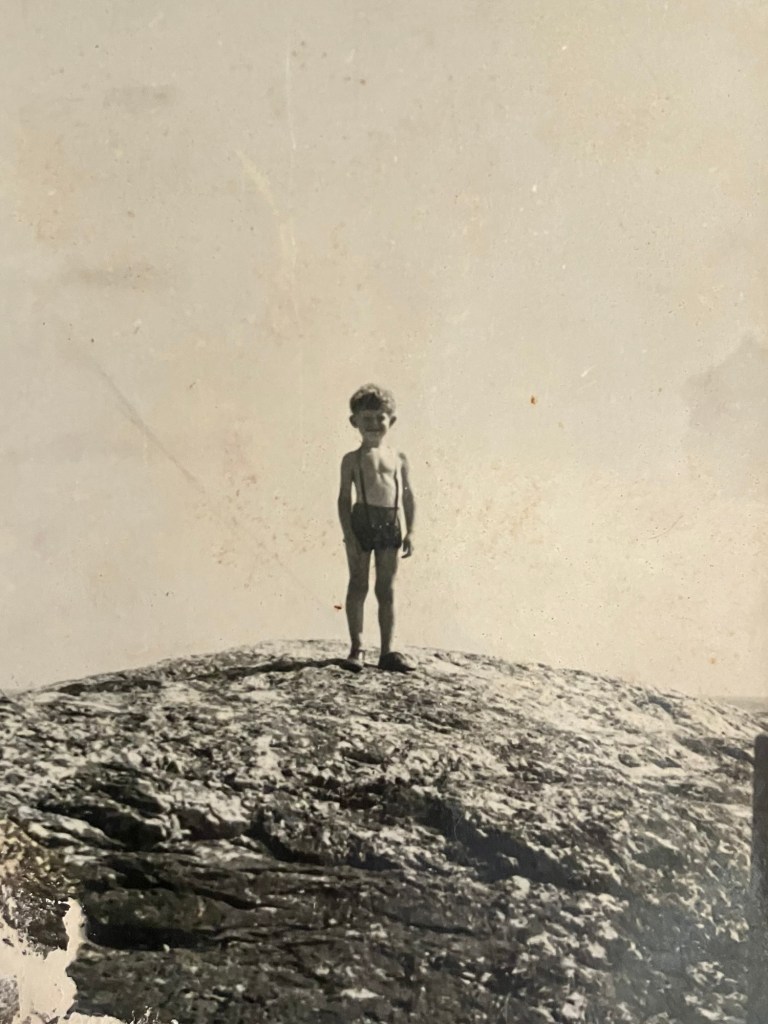
They’d brought Olav Emil’s grandmother to Norway but left his grandfather and uncle back in South Africa. So surely they were planning to head back there earlier than they did. This does not match the story that they had done wrong in Norway, and were running back with their tails between their legs as family folklore says.
Now, it gives me great pride to find out that, not only was Arnljot not a Nazi supporter, he had the courage to be stubbornly resistant.
On 8th November 1943, midway through the war, the Stapo (Quisling’s Nazi-supporting police force) had checked Arnljot out for the German security police, and found he was an “opponent of the new system” and “not politically reliable”, despite not being a member of any particular political organisations of Nazi concern (Freemasons, the communist party, etc). They also reported that he was not a member of the Nazi regime (Quisling’s far right Nasjonal Samling party). But an opponent of it. Go Arnljot!
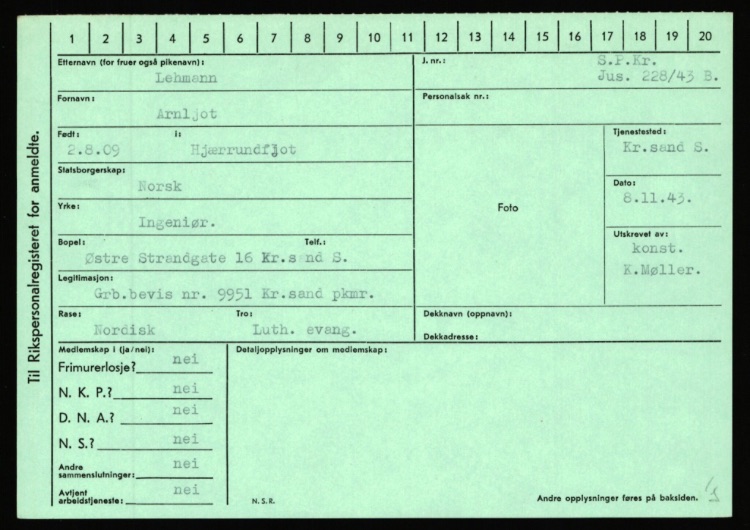
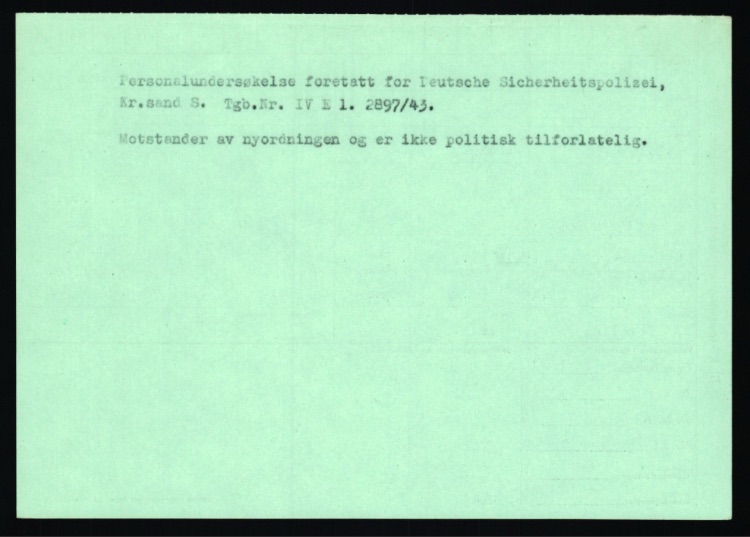
So he was a known anti-Nazi, and had been formally investigated and reported as such by the Stapo.
He had also been reported to the Stapo, by two tittle-tattle dobbers, for perceived discrimination. They were undercover informants and members of the Nasjonal Samling. They were a married couple with children who were tenants of Arnljot’s, possibly in his blue house in Kristiansand, rented out whilst Arnljot took refuge in the countryside with his beaver cousin.
The informants carried grudges: “Arnljot discriminated against them and terminated their lease, because of their Nazi alliance”. They felt Arnljot favoured his other tenants who were vocal anti Nazis and were “ganging up” on the informants. Arnljot, his family, and the others were all placed at risk of interrogation, torture, prison camp. execution. Oh how dangerous and bitter people can be!
Perhaps the informers were hoping that, by reporting Arnljot, he would “disappear” and his house be gifted to them by the new state rulers.
But despite this (and thankfully), Arnljot does not seem to have been arrested during occupation.
Could he have perhaps changed his alliances after he was investigated? We could find no records that he was a member of Quisling’s Nasjonal Samling party during the war. Those who were members (around 43,000 to 50,000 of Norway’s 3 million population) mostly joined to gain favor or protect their jobs.
So his non-membership was impressive. He could have easily joined to stay out of danger whilst the country was under indefinite Nazi regime; whilst having to make a living for himself and his wife, mother-in-law and young son; whilst stranded on the other side of the globe from home. But he didn’t.
I think I’ve cleared Arnljot’s name. He’s not a black sheep. He’s someone to look up to.
Why did we believe bad of him? I blame his tittle-tattle tenants, who after the war probably spread lies about him to get the heat off their own weak backs!
___________________________________
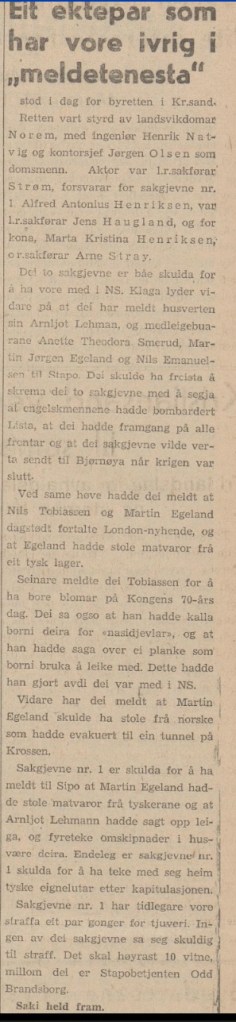
From newspaper clipping- translation:
A married couple who have been active in the “reporting service” appeared today in the city court in Kristiansand.
The court was presided over by treason judge Norem, with engineer Henrik Natvig and office manager Jergen Olsen as judges. The prosecutor was attorney Strem.
The defense attorney for defendant no. 1. Alfred Antonius Henriksen, was attorney Jens Haugland, and for his wife, Marta Kristina Henriksen; attorney Arne Stray.
The two defendants are both accused of having been members of the *Nasjonal Samling (NS).
The complaint further states that they have reported their landlord Arnijot Lehman (sic), and their fellow tenants Anette Theodora Smerud, Martin Jergen Egeland and Nils Emanuelsen to Stapo. They allegedly tried to intimidate the two defendants by saying that the English had bombed Lista, that they were successful on all fronts, and that the defendants would be sent to Bjørnøya when the war was over.
By the same token, they had reported that Nils Tobiassen and Martin Egeland had reported London news daily, and that Egeland had stolen food from a German warehouse.
Later, they reported Tobiassen for having brought flowers on the King’s 70th birthday. They also said that he had called their children “Nazi devils” and that he had sawed over a plank that the children used to play with. He had done this because they were members of the NS.
Furthermore, they have reported that Martin Egeland allegedly stole from Norwegians who had evacuated to a tunnel in Krossen.
Defendant no. 1 is to blame for having reported to Sipo* that Martin Egeland had stolen food from the Germans and that Arnljot Lehmann had terminated their lease, and made changes to the property.
Finally, defendant no. 1 was responsible for taking German possessions home with him after the surrender.
Defendant no. 1 has previously been punished a couple of times for theft. Neither of the defendants pleaded guilty. There will be 10 witnesses heard, among them the Stapo officer Odd Brandsborg.
The case was adjourned.
* Nasjonal Samling (NS), was the Norwegian Nazi Party. It collaborated with Nazi Germany after the German invasion of Norway in 1940. The NS, led by Vidkun Quisling, established a collaborationist government during the Nazi occupation. The NS actively assisted the German occupation authorities, including the State Police (Stapo), for example, by aiding in the registration and arrest of Norwegian Jews for deportation.
From newspaper clipping- translation:
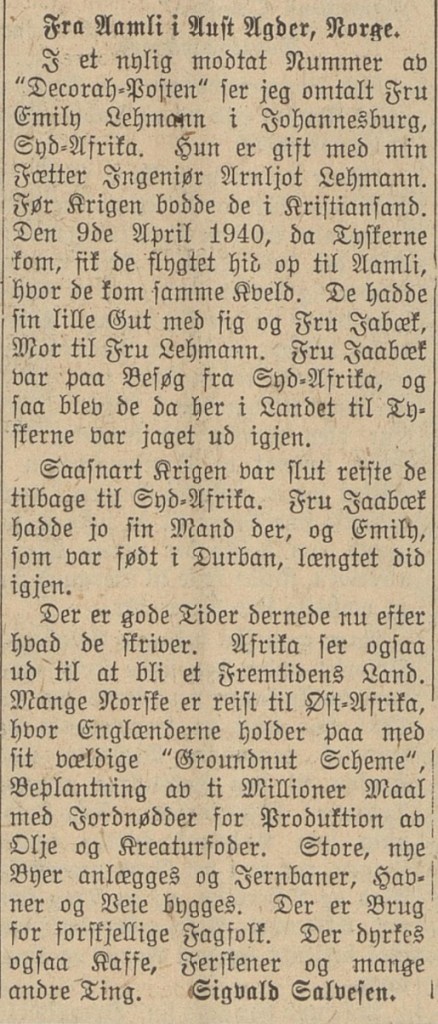
Letter to editor of notable Norwegian-language newspaper published in Decorah, Iowa 1874-1972:
I read in a recently received version of Decorah-Posten about Mrs Emily Lehmann in Johannesburg, South Africa. She is married to my cousin engineer Arnljot Lehmann. Before the war they lived in Kristiansand. The 9th of April 1940, when the Germans came, they fled to Aamli, where they arrived the same evening. They brought with them their little boy and Mrs Jaabæk, Mrs Lehmann’s mother. Mrs Jaabæk was on a visit from South Africa, and they all stayed here untill the Germans were defeated and left the country.
When the war was over, they went back to South Africa. Mrs Jaabæk’s husband lived there, and Emily, who was born there, was longing back.
There are good times down there, according to what they write. Africa seems to be a land for the future. Many Norwegians have travelled to East Africa, where the English are doing their vast Groundnut scheme*, planting 10 million acres with groundnut for production of oil and animal food. New big cities are being built, harbours and roads. They need a lot of skilled hands from different areas. They also grow coffee, peaches and other things.
Sigvald Salvesen
*This letter links the South African immigration to the “Groundnut Scheme”, which I’d never heard of. So I looked it up and found this fascinating article.
This might be the article Sigvald Salvesen is referring to:
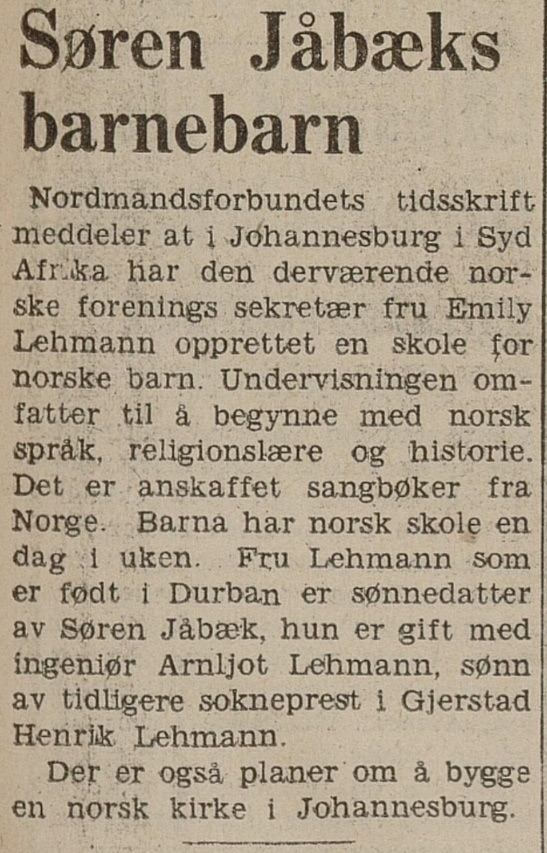
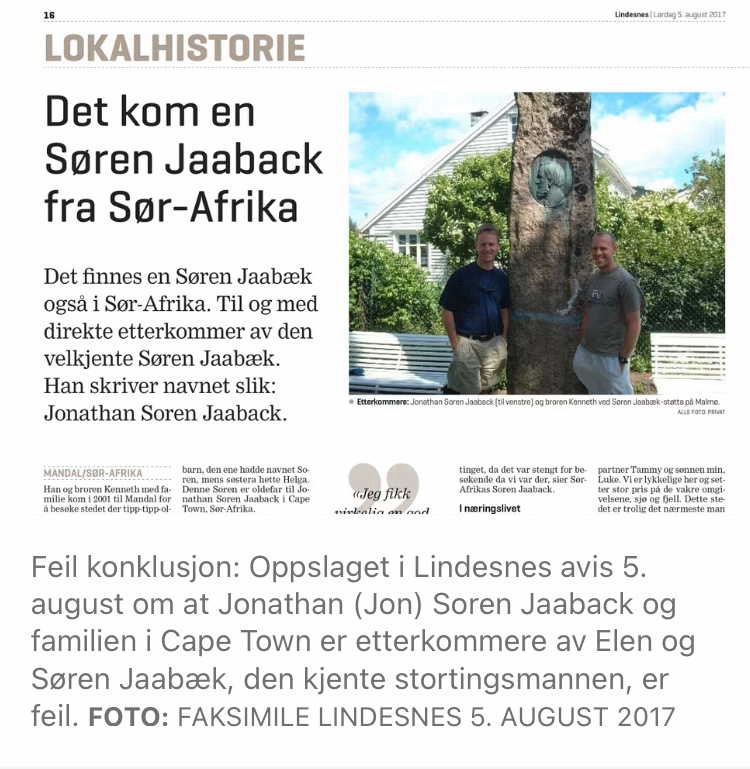
I am interested in the connection between Emily and the famous Søren Jaabæk. Someone’s added a correction to this article below saying the connection reported is not true. Her brother’s family and I are trying to get to the bottom of it.
Summary: We are not Nazis. In fact the opposite. Proud and brave Nazi resisters.


